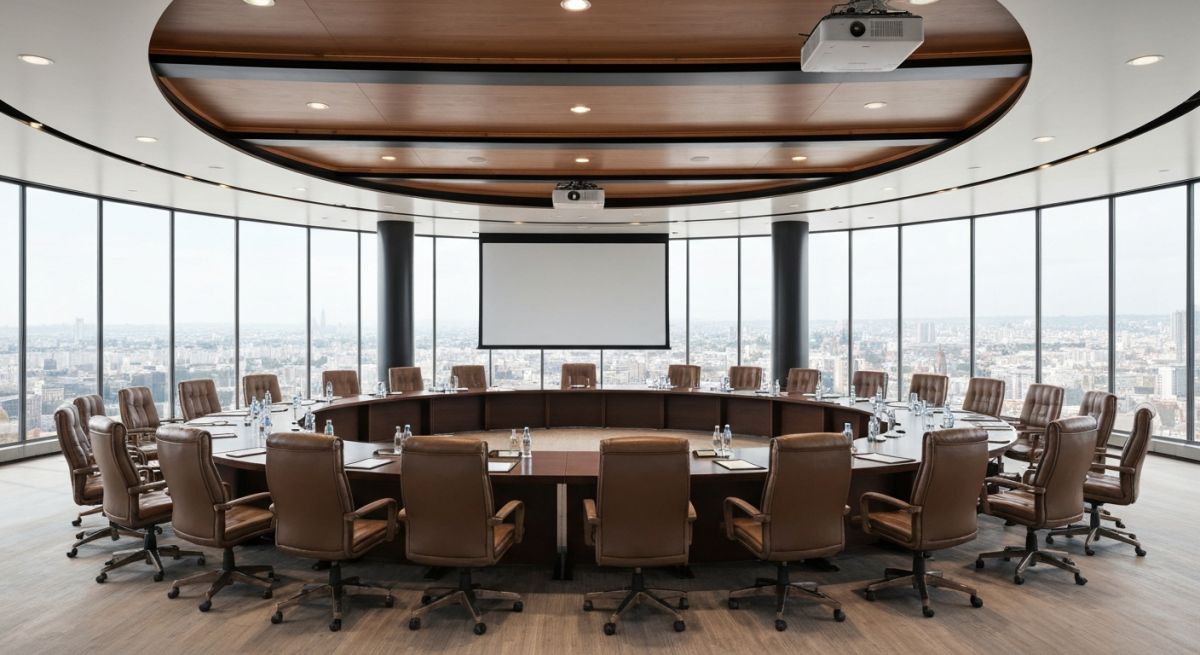
People reach for the same shorthand when the Security Council makes the news. It’s either the body that runs the world or the body that can’t agree on anything. Both descriptions get repeated, often in the same week, and both turn out to be right. What almost never gets explained is that they come from the very same rulebook. The Council can act with a force no other international body commands, and it can freeze solid on the exact issues where that force is most wanted — and once you see how it is built, neither outcome is a surprise.
What the Council is for
The United Nations runs on a treaty. That document, the Charter of the United Nations, hands the Security Council “primary responsibility for the maintenance of international peace and security.” Read the phrasing carefully, because it draws the line that matters. The General Assembly is a room where every member state has one vote and where the resolutions that emerge are, in most cases, recommendations — the will of the room, expressed. The Council is something else. It was built to decide, and to have those decisions carried out. The Assembly advises. The Council commands.
Fifteen seats — and a permanent inner circle
There are fifteen members, and they do not stand on equal ground. Five are permanent members: China, France, Russia, the United Kingdom, and the United States. They never rotate out. The remaining ten are non-permanent members, elected by the General Assembly to two-year terms, with the seats spread across the world’s regions so no single part of the globe dominates the bench. The terms are staggered. Half the elected seats turn over each year, which gives the Council a steady mix of familiar faces and fresh ones.
Why those five and not some other five? The answer is history rather than logic. The permanent membership froze the balance of power as it stood when the UN was founded, in the wreckage of the Second World War — which is exactly why reforming the Council’s composition comes up, again and again, and goes nowhere. Under the rules as they stand, though, the split between the two kinds of member decides almost everything. It decides how the Council votes. Current membership and structure are kept up to date on the official UN Security Council site.
How the Council votes — and the meaning of the veto
Each of the fifteen has one vote. On procedural questions, nine affirmative votes carry the day — any nine. On substantive matters, the ones that actually direct action, you still need nine yeses, but a second condition rides on top: none of the five permanent members may cast a negative vote against the measure.
That condition is the veto. One permanent member, voting no, can sink a substantive resolution that the other fourteen support. All of them. There is a softer move available too. A permanent member that dislikes a measure but doesn’t want to be the one to kill it can abstain, and long-settled practice treats such an abstention as not blocking adoption. The veto is the single most consequential piece of the whole design. It guarantees that no major action goes forward over the flat opposition of any of the five — a deliberate choice, meant to keep the great powers inside the tent rather than storming out of it. The same guarantee is why the Council seizes up whenever those powers pull in opposite directions. You cannot have one without the other.
The tools the Council can use
Say the Council does agree. What can it reach for? The Charter lays out a graduated set of instruments, and it pays to keep them separate, because public debate tends to smear them into one.
The gentlest end is diplomacy. The Council can push parties toward a negotiated settlement — calling for talks, lending its good offices, recommending terms. Then comes a firmer tier. Once the Council determines there is a threat to the peace, a breach of the peace, or an act of aggression, it can impose measures not involving armed force: economic sanctions, arms embargoes, travel bans, the severing of communications and diplomatic relations. And if it judges those measures inadequate — either likely to fail or already failing — the Charter lets it authorise action by air, sea, or land forces to restore international peace and security. Diplomacy, then pressure, then, at the far end, force.
Sitting slightly apart from all of that is peacekeeping. UN peacekeeping operations, where member states supply personnel to help hold ceasefires and prop up fragile settlements, are set up by the Council even though no single chapter of the Charter names them. They live in a middle ground. More muscular than diplomacy, yet grounded in consent and impartiality rather than the raw enforcement logic of authorised military action.
Why “binding” is the key word
Here is the feature that separates the Security Council from nearly every other international body: the legal weight of what it decides. Under the Charter, UN member states agree to accept and carry out the Council’s decisions. That single commitment is what turns a Council sanctions regime into an obligation binding on all members — not a polite request they may take or leave. A General Assembly resolution can voice the conscience of the international community. A Security Council decision under its enforcement powers can require states to act.
And that is precisely why the veto looms so large. Because these decisions carry genuine legal force, the founders wired in a brake — a switch any of the five can throw to stop the machine dead. The institution that results can impose real, painful consequences when the great powers line up together, and sits nearly motionless on the specific questions where they split. Readers following our world coverage will spot the pattern in how unevenly the Council responds to crises that, on paper, look much alike.
The presidency and the rhythm of work
The Council is engineered to work at any hour. It can convene on short notice, and a representative of each member is expected to be reachable at all times — the door never fully closes. The presidency rotates every month, passing between members in the English alphabetical order of their names, so the job of chairing meetings and shaping the agenda moves along by routine instead of settling on any one state. It is a small detail. It is also a revealing one. Even with the permanent members wielding outsized power through the veto, the gavel itself gets shared, month after month.
Reading the Council clearly
Don’t picture the Security Council as a court, and don’t picture it as a world government. Picture a tightly engineered compromise between two aims that pull against each other: giving the international system teeth, and keeping the most powerful states bought into that system. The fifteen seats, the five vetoes, the toolkit that climbs from diplomacy to sanctions to authorised force, the binding nature of every decision — they all snap together into one coherent logic. When the Council acts, it acts with rare authority. When it doesn’t, the reason almost always traces back to the voting rule, not to a lack of will to draft words on a page.
For the primary texts, go to the source. The UN Charter and the official Security Council pages set out the composition, the procedures, and the powers in full. Read any crisis against those rules and you can finally tell the two questions apart — what the Council is able to do, and what it is willing to do.